Tree Health
Tree Cabling or Bracing in Ottawa: When Support Helps and When It Does Not
Cabling and bracing can reduce movement in a weak union, but neither is a guarantee. Learn what to ask before choosing support, pruning, monitoring or removal.
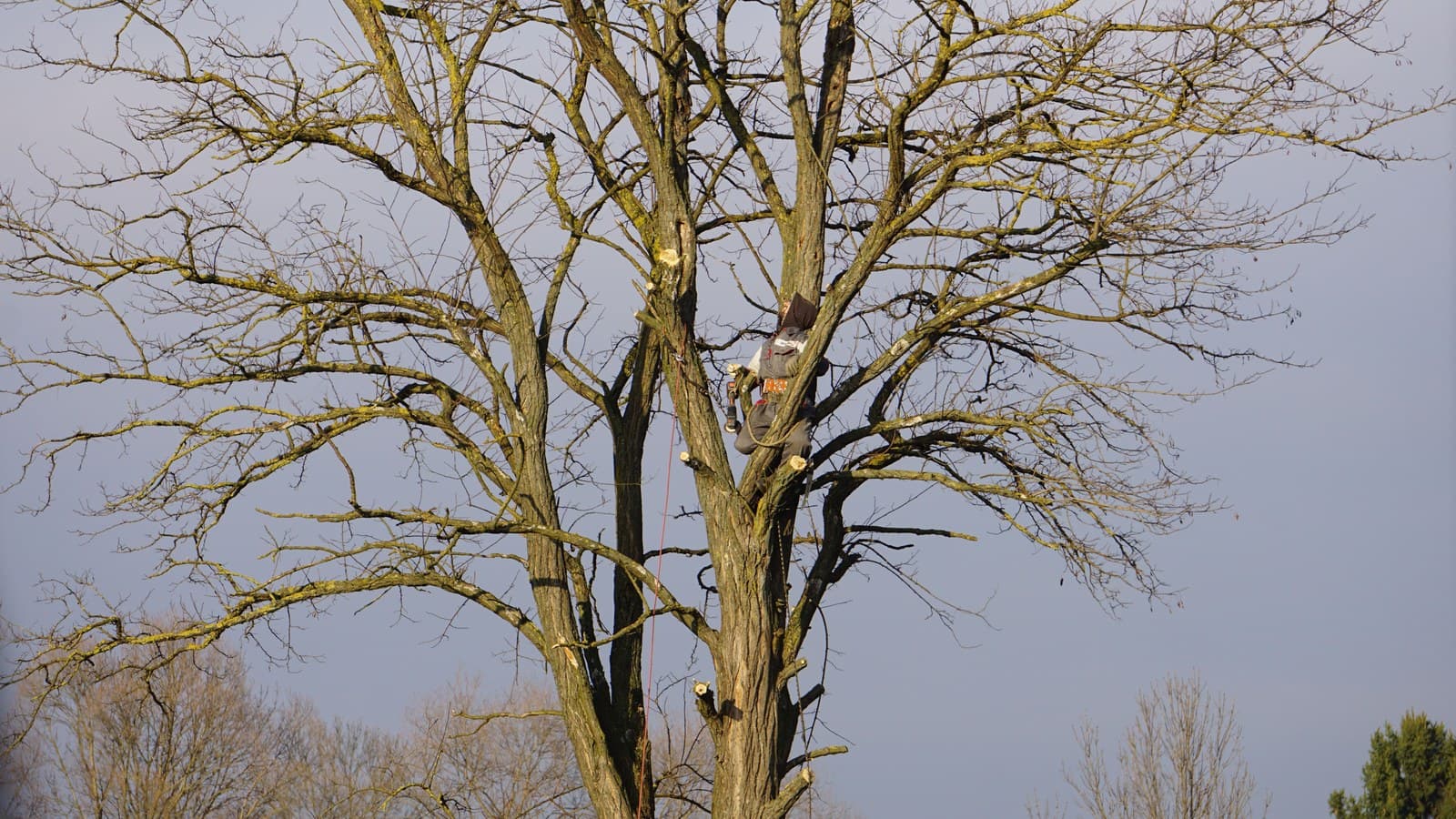
A mature tree with two stems joined in a narrow V, a crack or a long overextended limb can leave you with an uncomfortable choice: investigate support, prune it, monitor it or remove it. Cabling and bracing can be part of that decision, but they are not a universal fix.
The short answer is that a support system may reduce movement in a structurally weak part of an otherwise suitable tree. It does not give the tree primary support or guarantee that it will not fail. The right choice depends on the defect, the tree's health, what could be struck and whether the owner can keep up with inspections.
What cabling and bracing actually do
Cabling connects two or more parts of a tree so they move less relative to one another. Bracing uses a rigid rod through a weak union or split to limit spreading. The two systems can be used together, but they are not interchangeable labels for the same work.
Both are supplemental supports. They reinforce a weak area or limit movement; they do not become the tree's primary support. That distinction matters when a property owner is trying to decide whether a mature tree can remain. A cable is not a promise that the tree is safe in every wind, ice or snow event.
When an assessment may consider support
A professional may consider a support system when the tree has a structural weakness but still has enough health and sound wood for the proposed work. Common examples include codominant stems, included bark, an overextended limb or storm damage that leaves a valuable part of the tree standing.
The visible feature is only one part of the decision. The assessment also needs to consider the tree's condition, the size and position of the weak part, the likelihood of movement, the people and property below it, site history and the owner's tolerance for ongoing maintenance. A support recommendation should explain the objective, not just name a product.
- What part of the tree is weak, and what evidence supports that conclusion?
- What could be struck if the union or limb moves or fails?
- Would selected pruning, target management or monitoring address the same concern?
- Is the tree healthy enough for the hardware and future inspections?
When support may not be enough
Not every tree can be reinforced. Extensive decay, poor vitality, a failing root system, a major split or a defect that cannot be brought to an acceptable level of risk may change the recommendation. In those cases, pruning, target changes, monitoring or removal may be more honest than installing hardware and hoping it buys time.
Ask what the plan is if the tree declines or the supported union changes. A responsible recommendation should state its limits and the conditions that would trigger another assessment. If the only reason for the cable is to avoid discussing removal, the decision has not been explained well enough.
Cabling and bracing are not one-size-fits-all
Arborists distinguish between proactive and reactive support. A proactive system may limit movement before a defect has started to split. A reactive system may address a union that is already showing cracking, splitting or tearing. Those situations can call for different hardware, placement and follow-up.
Dynamic systems allow more movement and are often used proactively. Static or steel systems restrict movement more and may be considered for a union showing signs of failure. Bracing is a separate rigid-support decision. A homeowner should not choose between these systems from a product page or copy an improvised rope arrangement. The tree, hardware, attachment points and inspection plan need to be assessed together.
Inspection is part of the work
A support installation is not a fit-and-forget repair. Hardware, bark growth, tension, wear and the supported union can change. The tree owner is responsible for arranging the inspections, and the interval depends on the system, the tree and the site.
Purdue Extension describes annual ground checks and says an arborist will usually inspect the system from the tree every three years. The Tree Care Industry Association notes that dynamic systems need routine inspections and gives semiannual checks as an example for tension, girdling and UV degradation. Put the recommended interval, inspection responsibility and likely adjustment or replacement work in writing before approving the installation.
Keep utility and permit questions separate
If any part of the tree, a branch, a tool or the access method may come within three metres of an overhead power line in Ottawa, stop and use Hydro Ottawa's current safety and service-request route. Do not climb, install hardware or take a closer photo to solve the question yourself.
For a Gatineau property, Hydro-Québec says work that might bring a person, part of the tree or a tool within three metres of electrical wires must be handled by an arborist authorized by Hydro-Québec. Use that utility route before arranging private tree work.
A support recommendation also does not decide tree ownership or a future removal permit. If the plan changes from preservation to removal, check the current Ottawa or Gatineau authority route before scheduling the work. The municipal decision belongs to the relevant city, not to a blog post or a contractor's assumption.
Questions to ask before approving a support system
A useful quote should leave you with a decision, not just a hardware name. Ask the arborist to explain:
- Which condition is being addressed, and is it observed or still uncertain?
- Is the goal to limit movement, close a split, reduce end weight or monitor a defect?
- Why is this approach better for the tree and the target than pruning, monitoring or removal?
- What inspection schedule, adjustment plan and replacement responsibility apply?
- What changes if the tree declines, the union opens or the target below it changes?
- Which parts of the quote cover assessment, installation and future inspections?
What to include in an Ottawa request
Send the property address, the tree's location, what could be struck and the decision you are trying to make. Add safe, wide photos taken from the ground, the date of any storm or construction, visible cracks or splits, nearby wires and whether the concern is about one limb, a union or the whole tree.
Photos can help route a request, but they do not establish the tree's condition or confirm that a cable or brace is appropriate. If the property is in Gatineau, say so at the start so the utility, municipal and crew requirements are checked for the correct jurisdiction.
Frequently asked questions
Does cabling save every tree?
No. Support systems can reduce movement in selected weak areas, but they do not eliminate failure risk and are not appropriate for every tree. Health, decay, roots, targets, the structural defect and the inspection plan all matter.
Is bracing the same as cabling?
No. Cabling connects tree parts to limit relative movement, while bracing uses rigid rods through a union or split. An arborist may recommend one system, the other or a combination based on the tree and the objective.
Can I install a tree cable myself?
Do not treat a support system as a DIY project. Installation can involve climbing, drilling, tension, structural failure and electrical hazards. A qualified arborist should assess the tree, choose the system and explain the inspection plan.
How often does tree cabling need inspection?
The interval depends on the system and the tree. Purdue Extension describes annual ground checks and usually an arborist inspection every three years, while dynamic systems may need more frequent routine checks. Follow the written plan for the actual installation.
Does a cable guarantee that a tree will not fail?
No. Cabling and bracing are supplemental supports that may reduce risk in a defined part of a tree. They do not provide primary support and cannot guarantee that the tree will withstand every storm or future change.
Sources
Rules and safety guidance can change. Check the current authority page before acting.
- Purdue Extension: Large Tree Cabling and Bracing
- Tree Care Industry Association: ANSI A300 Part 3: Supplemental Support Systems
- Tree Care Industry Magazine: An Introduction to Supplemental Tree-Support Systems, Part 2
- Hydro Ottawa: Vegetation management
- Hydro-Québec: Pruning a tree? Power lines nearby? Be careful!
- City of Ottawa: General information: Tree Protection By-law
Send the address, the tree, what could be struck and any safe photos. An Ottawa arborist consultation can separate observed condition, management options and production work. Utility or municipal questions should be routed to the relevant authority first.
Plan an Ottawa arborist consultation