
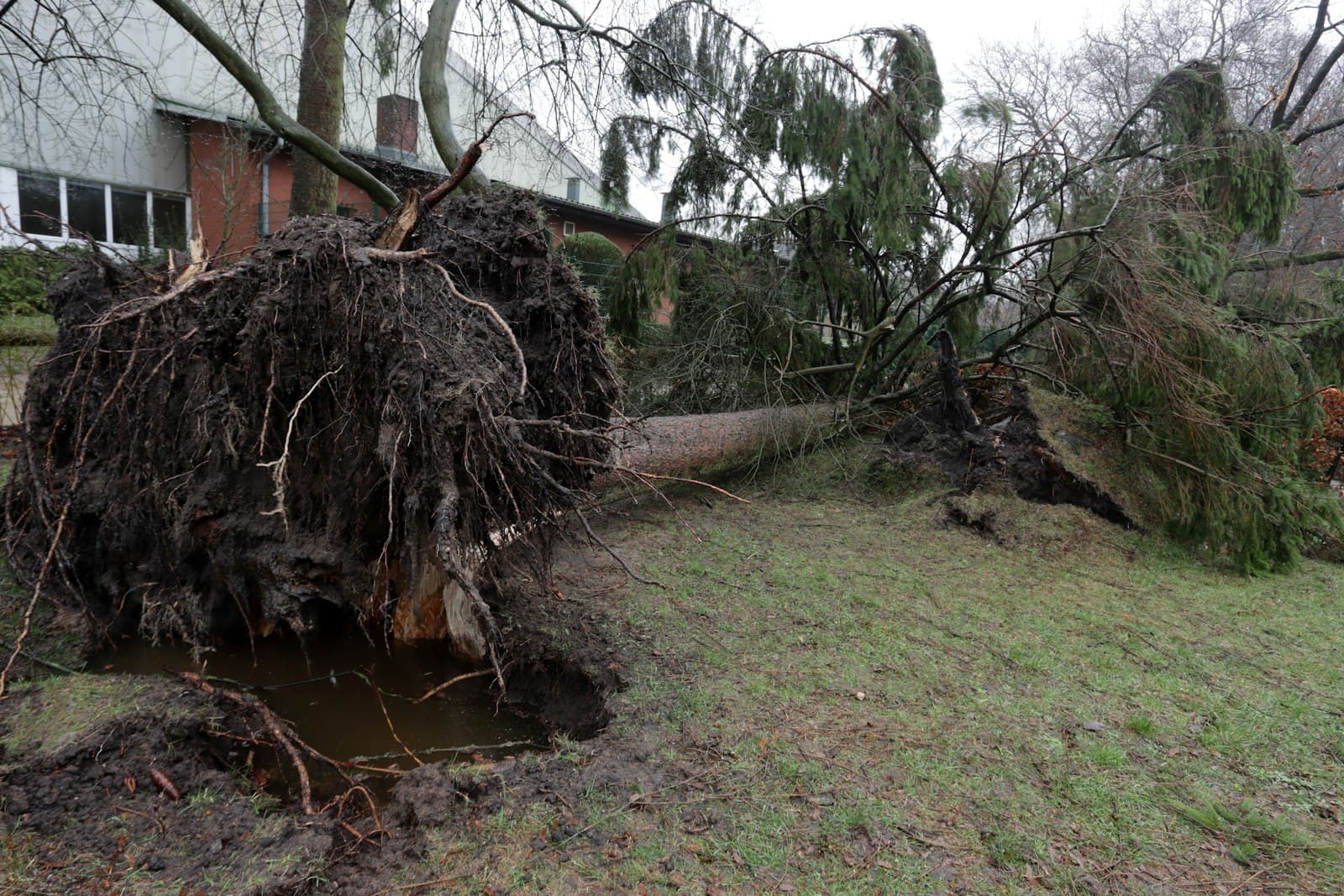
Use the right emergency route
Call 9-1-1 for fire, injury or immediate danger to people. Stay well away from any tree or branch touching electrical lines and contact the electrical utility. Contact 3-1-1 for a blocked public road or sidewalk, or when a City-owned tree may be involved.
Do not drive under, climb, pull, cut or move storm-damaged material. Tensioned limbs, supported trunks and root plates can move without warning, even after the wind has passed.
What to tell the dispatcher
Give the exact address, a safe callback number, whether anyone is hurt, whether wires are involved, what the tree is resting on, whether a public route is blocked and whether conditions are still changing. Say where you are standing and keep people and pets away.
Photos may help only if they can be taken from an already safe location. Never cross a barrier or approach the tree to improve the view.
Make-safe work and complete work
An urgent visit may focus on controlling access or removing an immediate load from a target. Full removal, debris hauling, stump work, roof coordination and restoration may occur later under a separate scope when daylight, weather, permits, utilities and equipment allow.
During widespread storms, work is prioritized by life safety, public access, active targets and crew capacity. No arrival time should be assumed until the call is assessed.
Documentation after property damage
Contact your insurer when insured property is damaged and follow its instructions. Record conditions only from a safe location. Ask the tree-service provider for an itemized scope and invoice, but remember that the contractor cannot guarantee coverage or make a claim decision.