
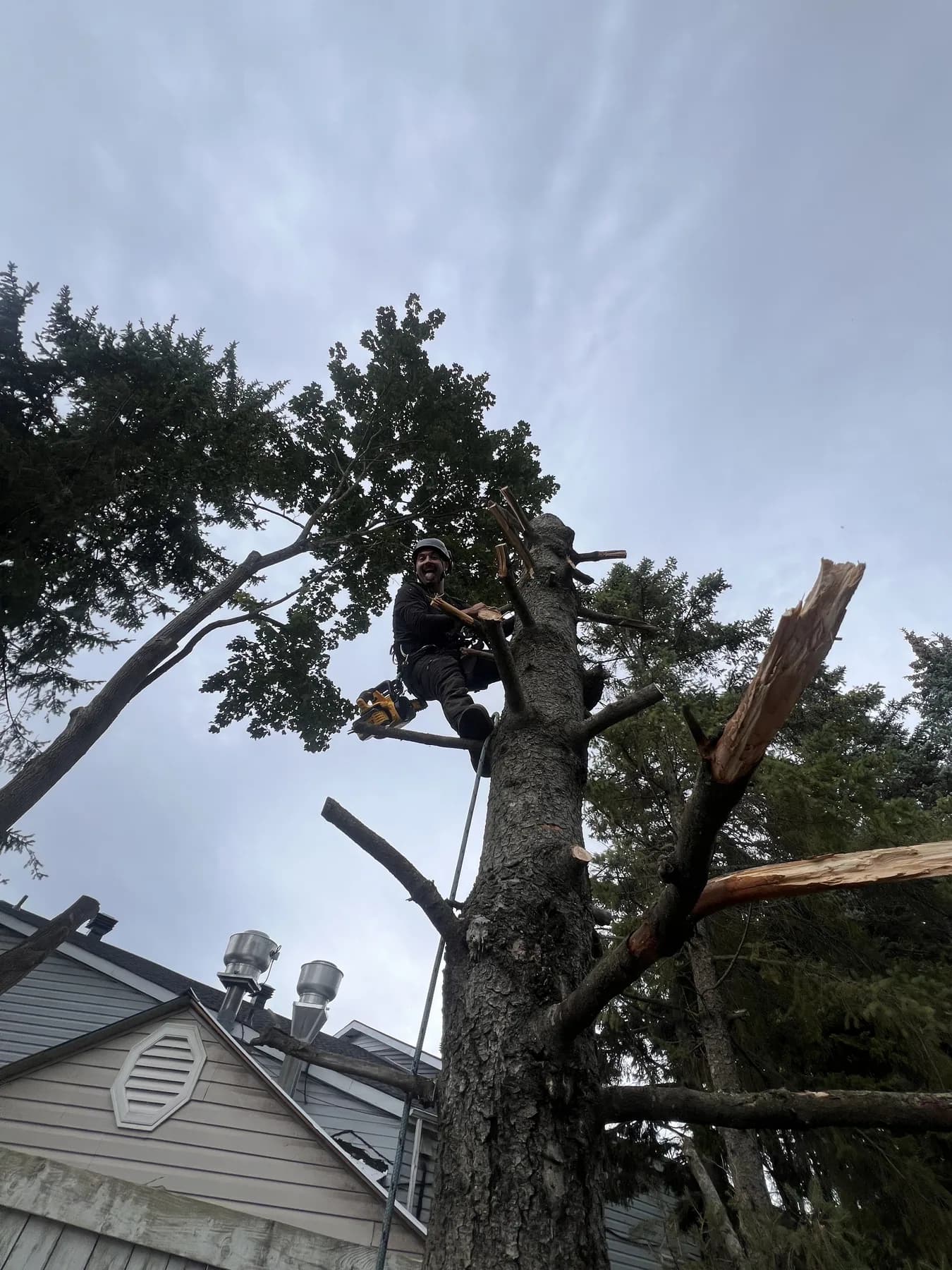
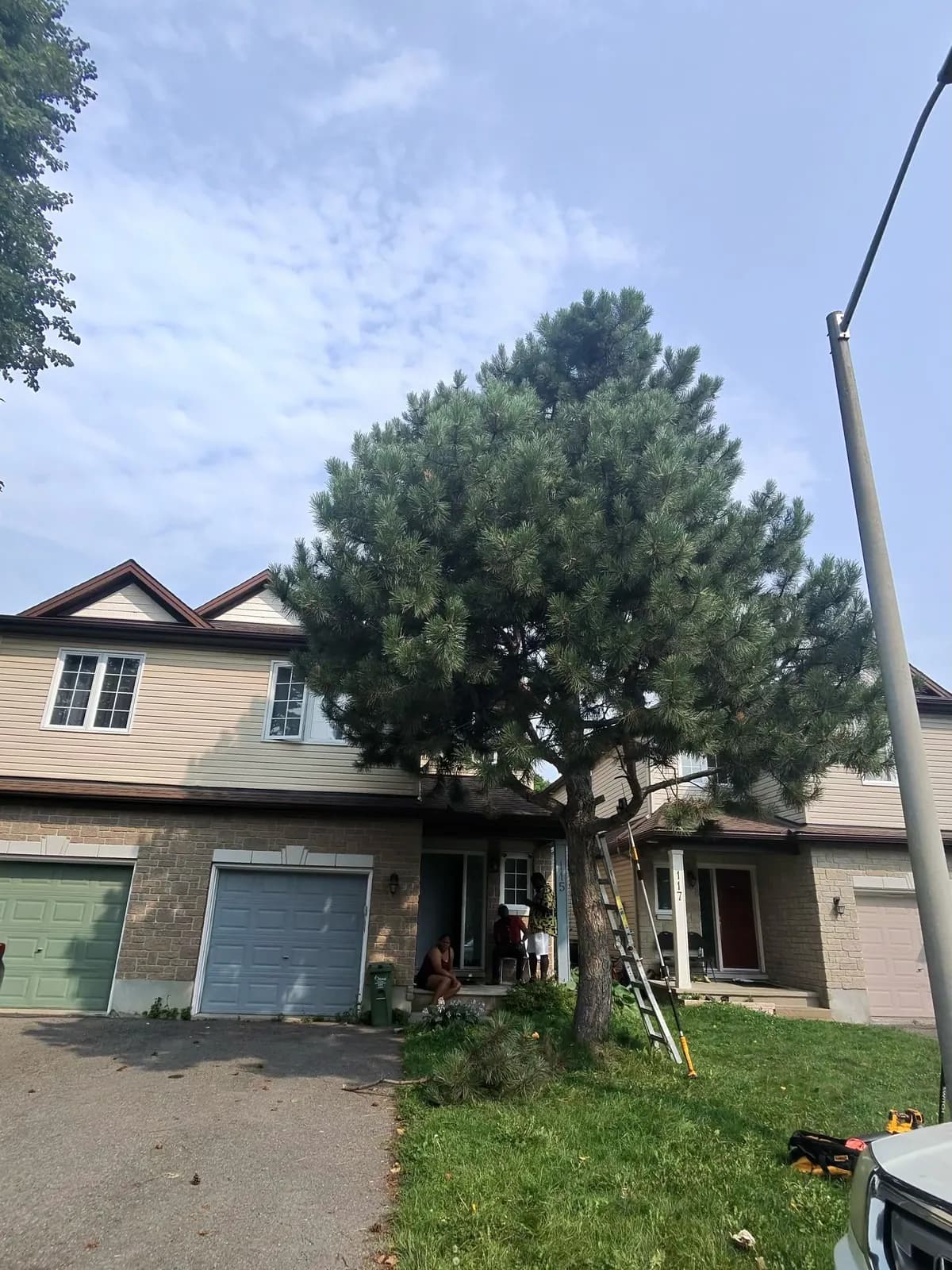
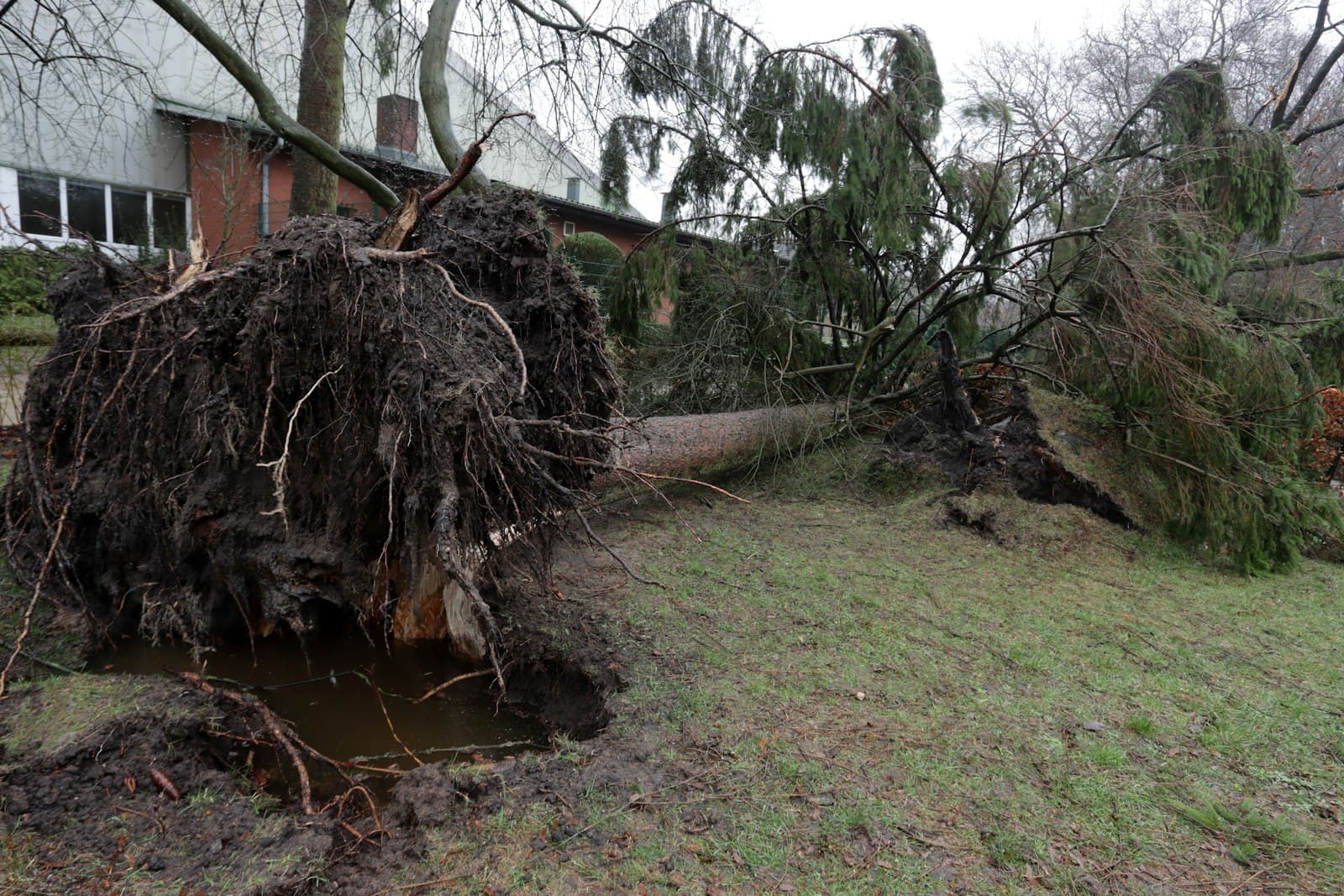
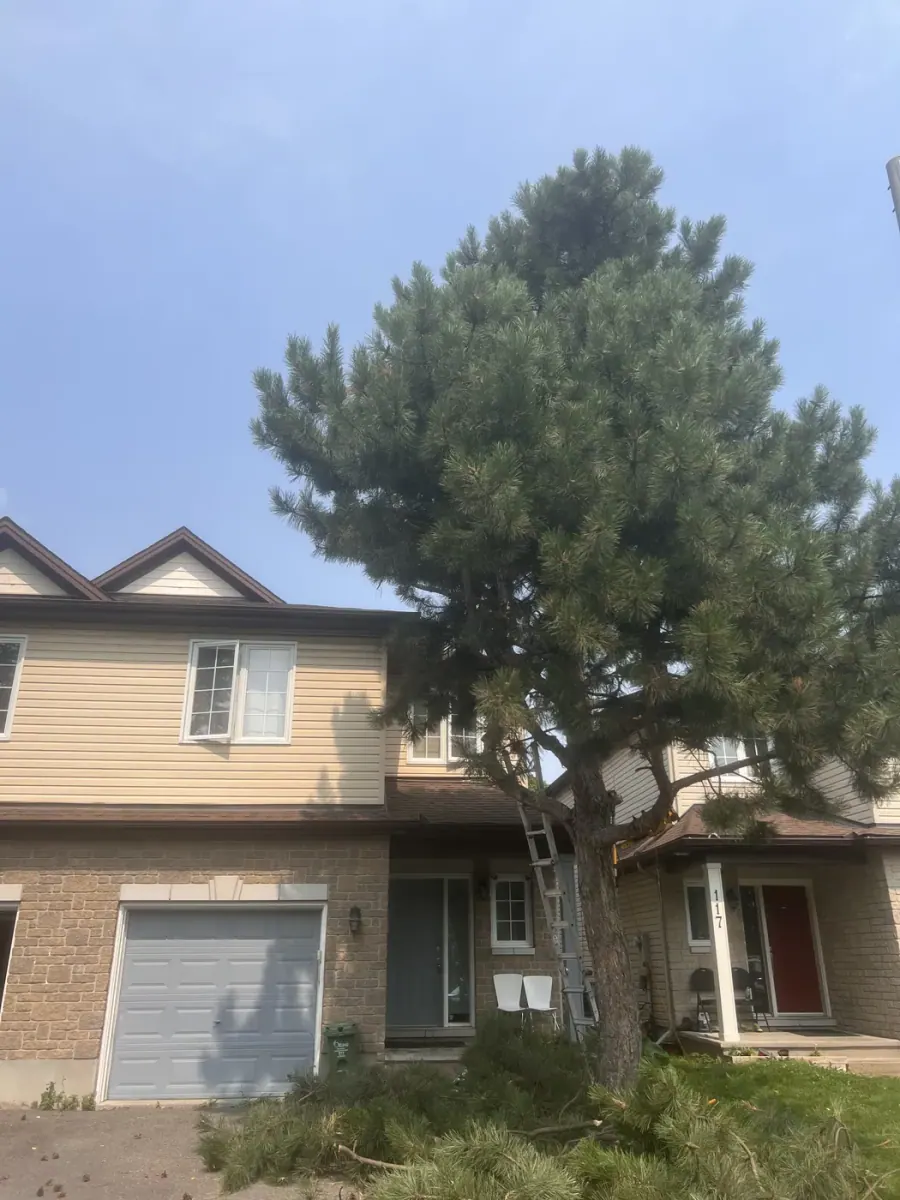
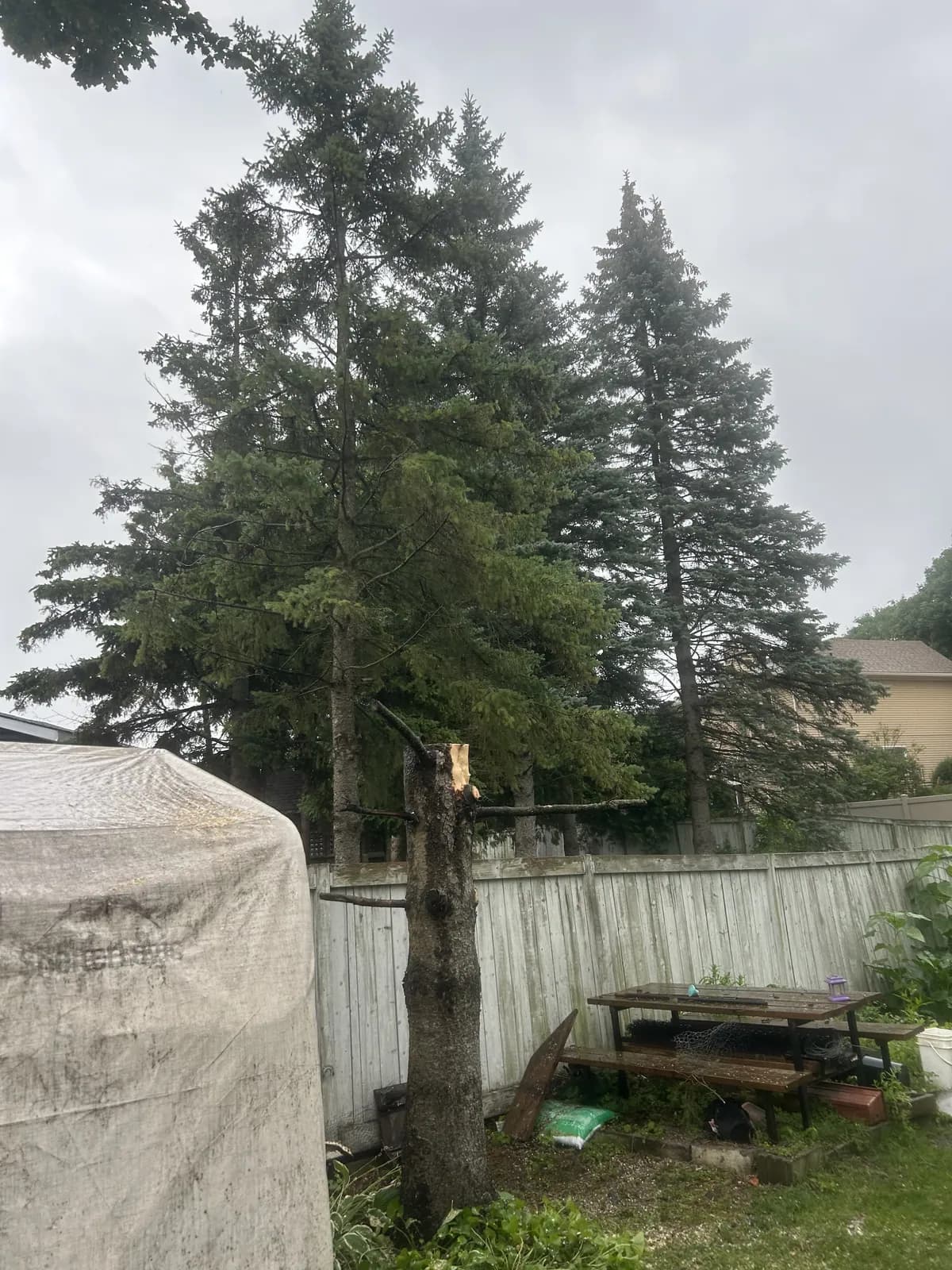
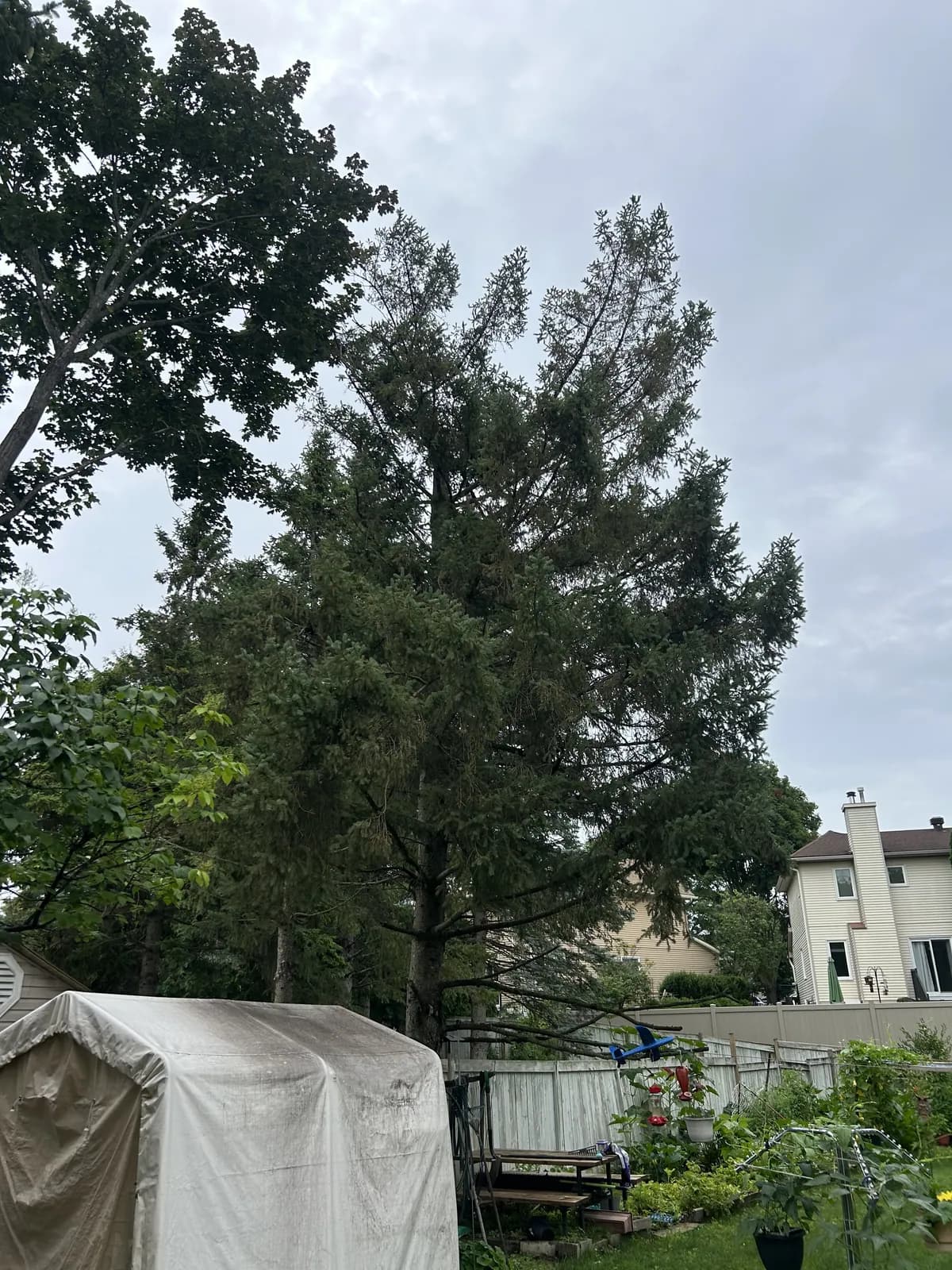
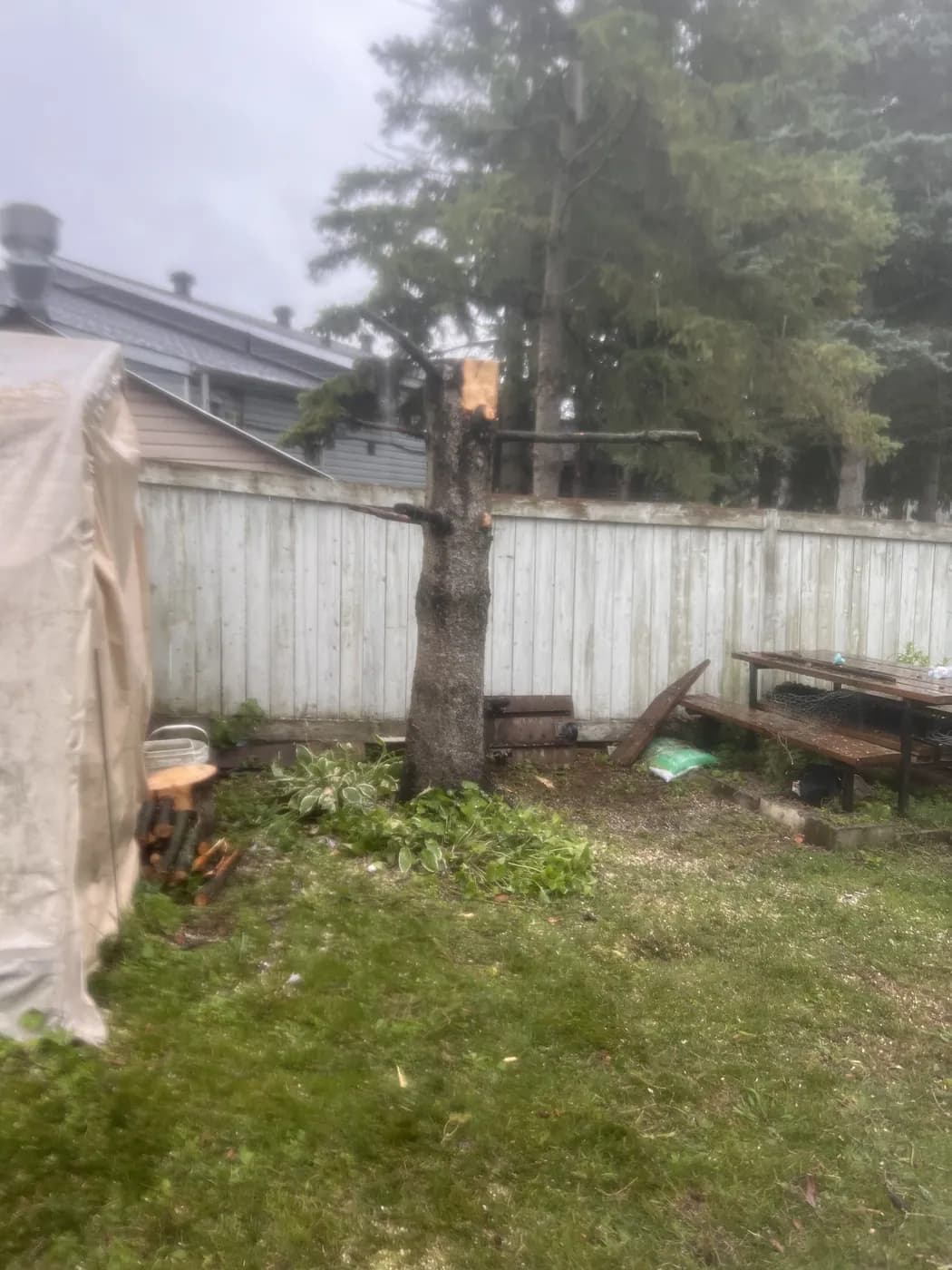
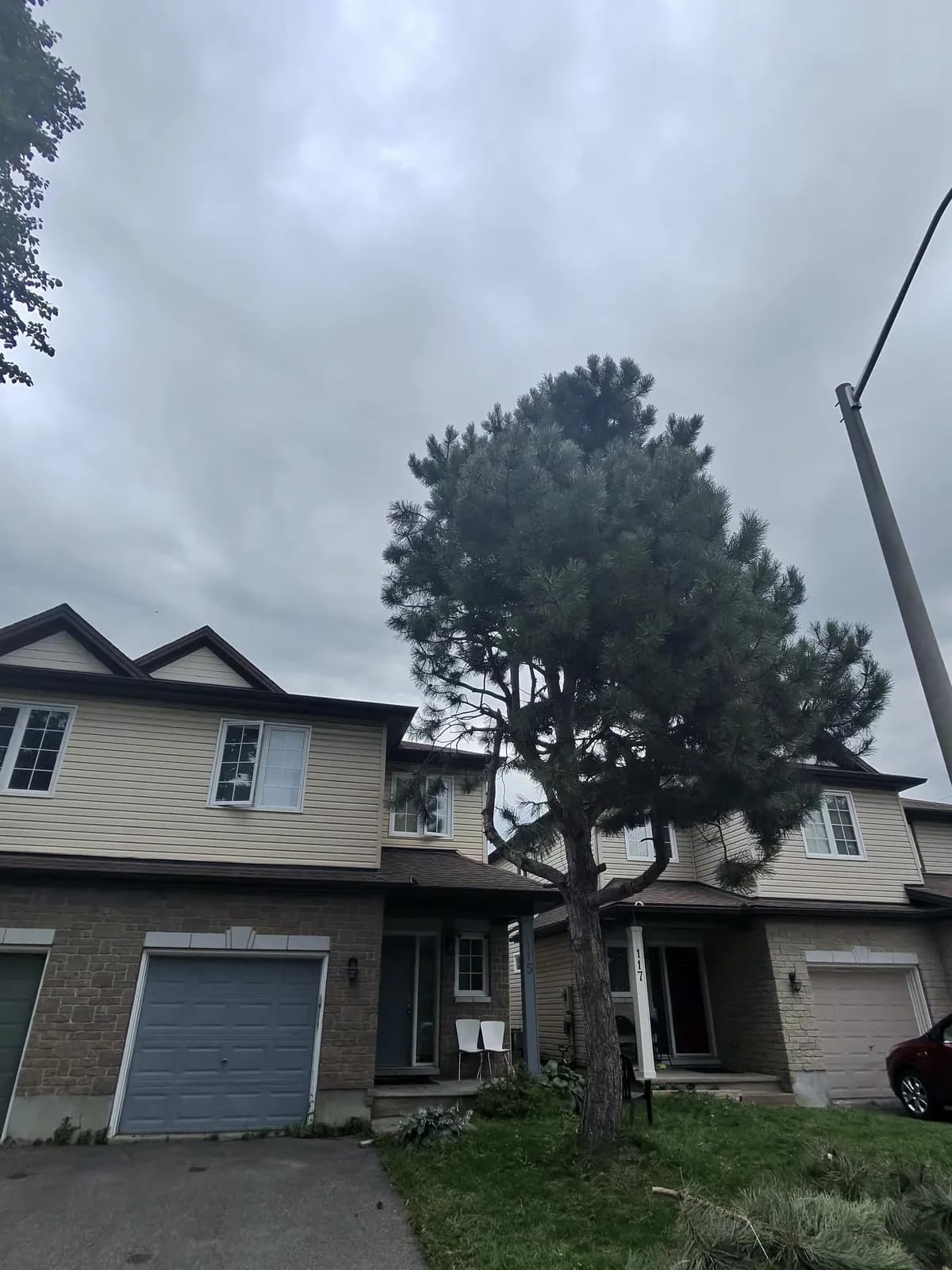
Start with the problem
A tree can look like a removal job when the real need is deadwood pruning, a risk assessment or more clearance from a structure. The reverse is also true: repeated trimming does not correct every structural problem. A useful first conversation covers what changed, what could be struck, when it was first noticed and what outcome you want.
Photos can help us route the request and prepare for a visit, but they cannot show every defect, root condition or target. Complex trees, formal reports and uncertain hazards may require an on-site assessment before a work method or price can be confirmed.
- Sudden lean, splitting, hanging limbs or storm damage: keep clear and call
- Crowding, deadwood, structure or clearance: start with pruning or assessment
- Dead, unwanted or conflicting tree: review removal and permit questions
- Remaining stump: identify access, depth and the future use of the area
- Municipal or construction requirement: confirm the exact report before booking
Assessment, preservation and planned care
An arborist consultation or tree-risk assessment should answer a defined question. It may document visible conditions, likely targets, options and limitations. Pruning, cabling, planting or monitoring are separate decisions and should not be treated as automatic add-ons.
For routine work, the quote should state the pruning objective, material to be removed, access plan, cleanup and anything excluded. For planting, it should also explain stock, installation, watering, protection and who owns aftercare.
Removal, stumps and urgent work
Tree removal planning includes ownership, municipal rules, overhead and underground services, access, targets, work method, wood, brush, stump and surface restoration. Those details explain why two removals of similar height can be very different jobs.
Urgent work begins with safety and correct routing. Fire, injury and immediate danger belong with 9-1-1. Wires may require the electrical utility. Public roads, sidewalks and City-owned trees may require 3-1-1. A private tree crew should only be called after people are clear of the area and the correct authority is involved.
What a useful quote should tell you
A clear written scope separates the tree work from permits, stump work, hauling, wood or chip retention, soil, seed or sod, traffic control and third-party fees. It should also identify assumptions that could change once the site is inspected.
If you do not know which service to choose, select ‘Not sure’ on the quote form. Describe the concern in your own words and include safe, wide-angle photos of the tree, access and nearby targets.