
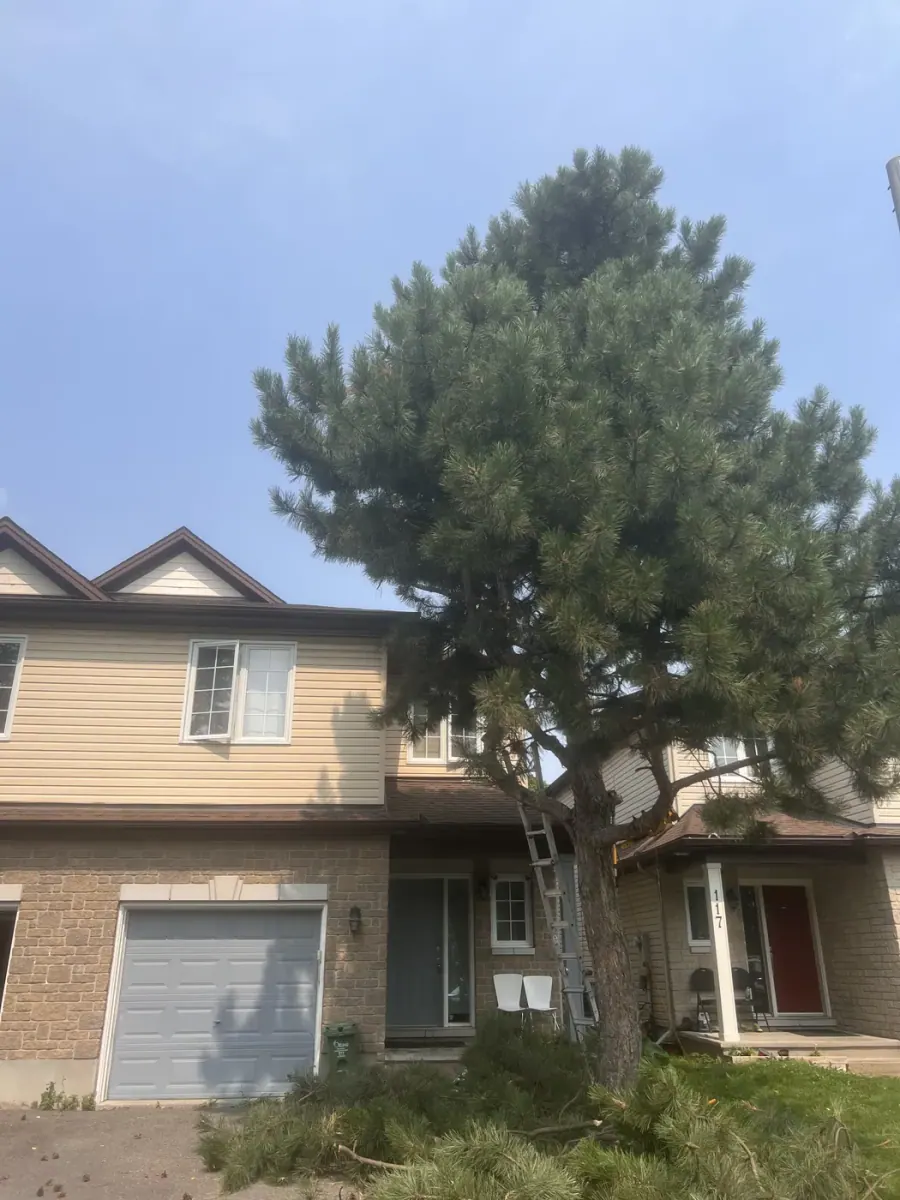
Choose the pruning objective
Common objectives include removing selected dead or damaged branches, improving young-tree structure, creating clearance, reducing a specific end-weight concern or restoring a previously damaged crown. Each objective calls for different cuts and a different expectation of what remains.
A useful quote identifies the tree, target branches or crown area, intended clearance and retained form. It should not use a universal percentage as a substitute for an arborist's judgement about species, age, condition and season.
Pruning is not topping
Topping removes branches to arbitrary stubs or reduces a crown without regard for natural form and suitable laterals. It can create large wounds, weak regrowth and a cycle of repeated cutting. Size-management requests should be discussed honestly: sometimes limited reduction is possible, and sometimes the desired size is not compatible with retaining the tree well.
Hedge shearing is a separate service. Mature trees and formal hedges respond differently and should not share one generic trimming specification.
Access, wires and cleanup
The plan considers climbing or lift access, drop zones, roofs, gardens, fences, traffic and people below. Branches near energized conductors require the utility or a properly authorized role; a private pruning quote does not override electrical-clearance rules.
Confirm whether branches are chipped and removed, chips remain, larger wood is cut or hauled and the work zone is raked or blown. Those choices affect the scope and price.
Timing depends on the goal
The best timing varies with species, condition, weather, pruning objective, wildlife and urgency. Dead or failed material affecting an occupied target may not follow the same calendar as planned structural pruning. Avoid one-month rules that ignore the tree and reason for work.