
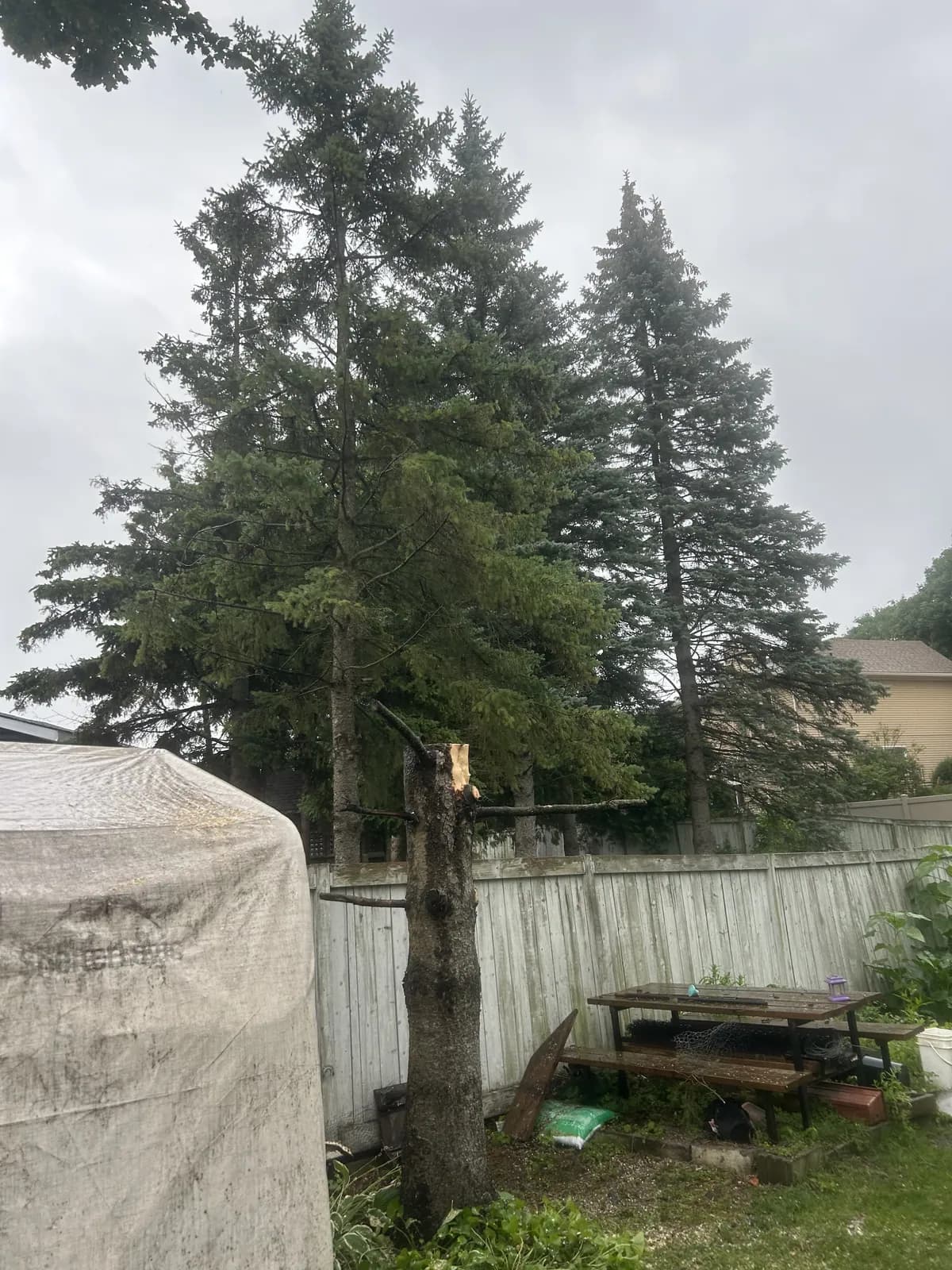
Grinding and excavation are different
Grinding reduces the stump and portions of the root flare into chips below the agreed grade. Roots remain beyond the grinding area and decay over time. Full excavation removes a larger root mass but causes more soil disturbance and needs different equipment, hauling and restoration.
If the area will support a new lawn, garden, fence, driveway, building or replacement tree, say so before quoting. The intended use determines whether standard grinding is enough.
Access and underground services
Measure the narrowest gate, side yard and turn—not only the opening nearest the stump. Note steps, slopes, retaining walls, soft ground, irrigation, lighting and septic or private services. Public utility locates do not identify every privately installed line.
The quote should state who requests public locates, who identifies private services and what happens if hidden rock, concrete, metal or utility conflict stops the work.
Depth, roots and regrowth
Grinding depth is measured relative to the surrounding grade and should be written into the scope. Surface roots may be included selectively, but chasing every root is not the same as stump grinding and can expand disturbance substantially.
Some species may send up shoots from remaining roots. Grinding removes the stump structure; it does not guarantee that every root is extracted or that regrowth is impossible.
Chips and the finished surface
A stump produces more chip-and-soil material than the visible wood suggests. Choose whether grindings are left in the hole, piled, spread or hauled. Backfill, imported soil, final grading, seed and sod should be separate, explicit choices.