
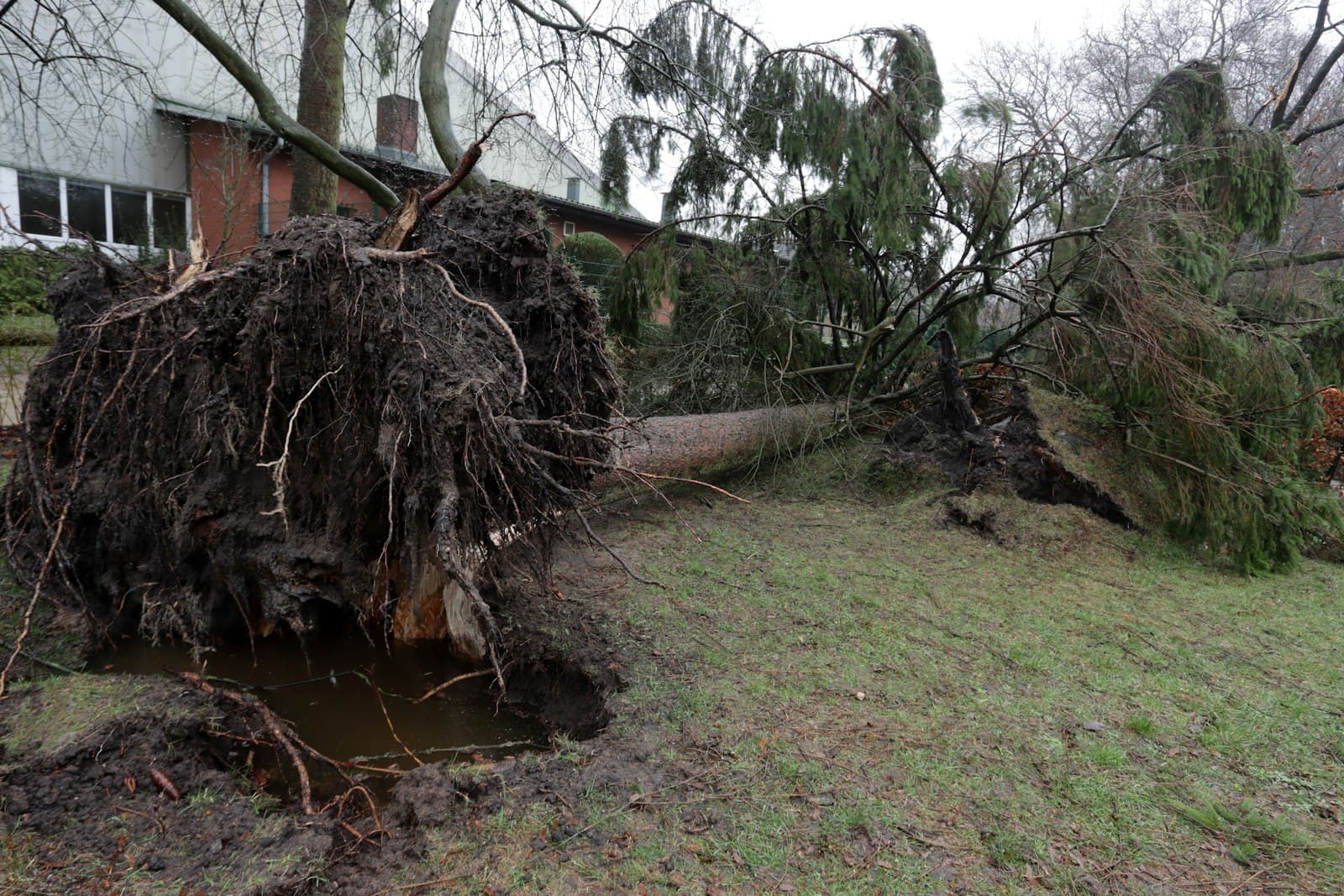
Conditions that call for immediate distance
Keep people away from a fresh or increasing lean, moving or lifted root plate, newly split trunk or union, hanging broken limb, partially supported tree or tree in contact with an electrical line. Listen from a safe place for active cracking and watch for continued movement without entering the area.
Call 9-1-1 for fire, injury or immediate danger to people. Contact the utility for electrical-line involvement and 3-1-1 for public obstructions or suspected City trees.
Visible conditions an arborist may examine
Dead branches, cavities, cracks, decay fungi, missing bark, weak unions, root damage, soil movement and sudden canopy decline can be relevant. Their significance depends on location, extent, species, tree response, site history and what is within reach.
Construction, excavation, grade change, trenching, soil compaction and the removal of neighbouring trees may alter the context even when the trunk looks unchanged.
A sign is not a complete diagnosis
Fungi may be important, but a picture alone may not identify the organism, affected wood or remaining strength. A lean may be longstanding rather than new. A cavity does not state how much sound wood remains. Avoid cutting, probing or climbing to investigate.
An assessment should identify the tree, targets, inspection scope, observed conditions, uncertainty, time horizon and reasonable management options.
Prepare for an assessment
Record when the condition was first noticed, whether it changed after weather or construction, how the area is used and what previous work occurred. Take only safe wide photos and keep people out until urgent movement or hanging material has been addressed.