
First contact and triage
Tell us the address, what you see, when it changed, what could be affected and what result you want. For urgent conditions, call rather than waiting on a form. Keep away from fallen or unstable material and use 9-1-1, the municipality or the electrical utility first when their role applies.
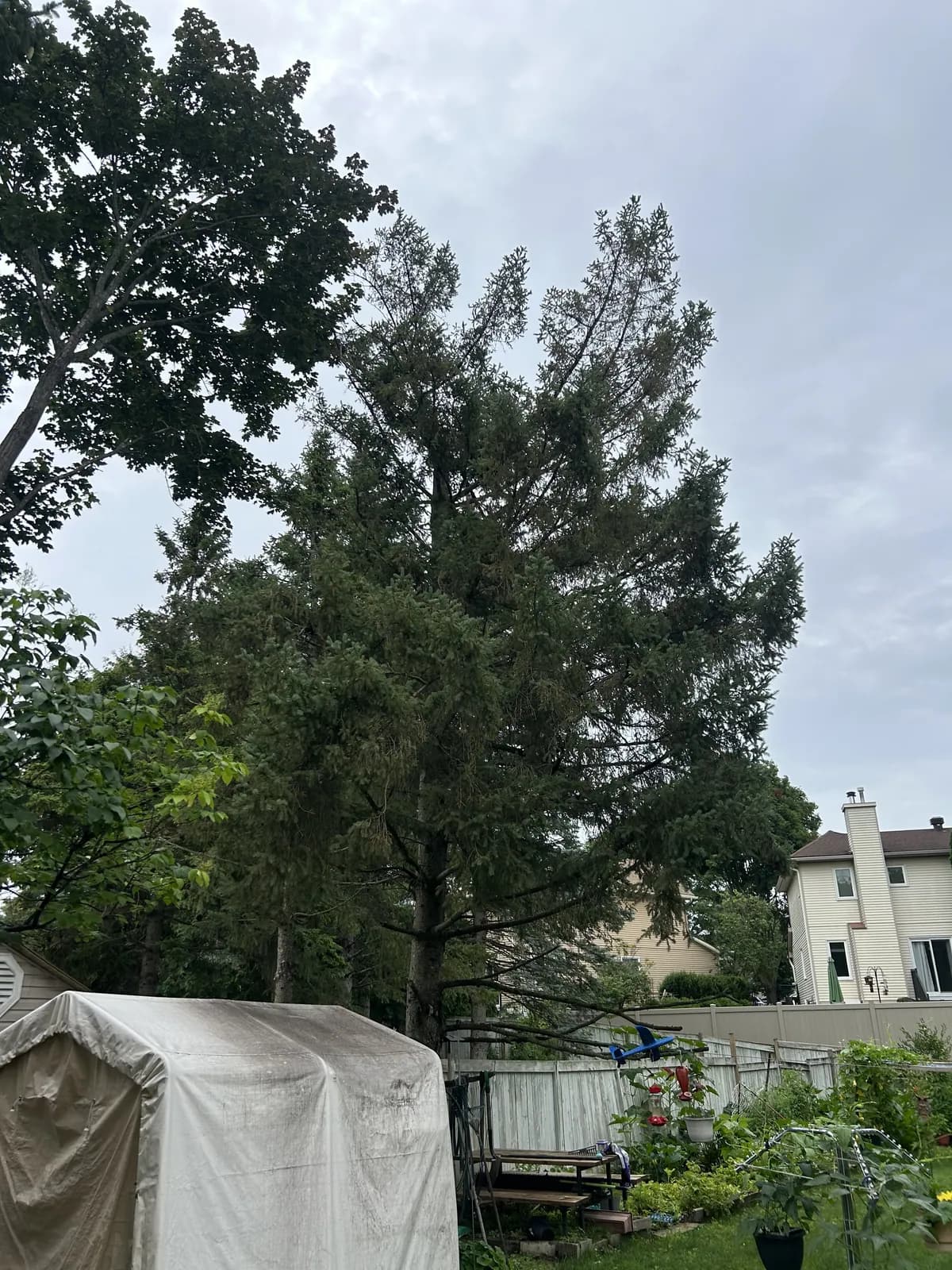
Wide photos of the whole tree, trunk area, access route and nearby targets can help. Never approach wires, climb, move a failed limb or stand beneath a suspect tree to take them.
Site review and options
A site visit confirms ownership questions, dimensions, access, targets, utilities, equipment options, material handling and the requested finish. Assessment and production work are separate: the person reviewing the tree should be able to explain alternatives, uncertainty and when a specialist report is needed.
When the correct choice is not obvious, options may include monitoring, pruning, support, planting changes or removal. A quote should not force a removal conclusion merely because removal equipment is available.
Written scope and scheduling
The written scope identifies the tree or hedge, objective, work method at a useful level, access assumptions, permits, utilities, wood, brush, stump, cleanup, restoration and exclusions. Professional reports, municipal fees and third-party work should be separated when they are not included.
Scheduling is confirmed after the scope is accepted and required prerequisites are in place. Weather, nesting wildlife, utility coordination, traffic controls or permits can change the safe work window.
Production, cleanup and closeout
On work day, the crew confirms the site, exclusion zone, access and scope before starting. If a material difference is found, the job is paused long enough to explain the change and document authorization where practical.
Closeout checks the agreed handling of brush, logs, chips and stump material, then reviews the work zone for damage or deferred items. Planting and preservation work may also include written aftercare or monitoring responsibilities.