
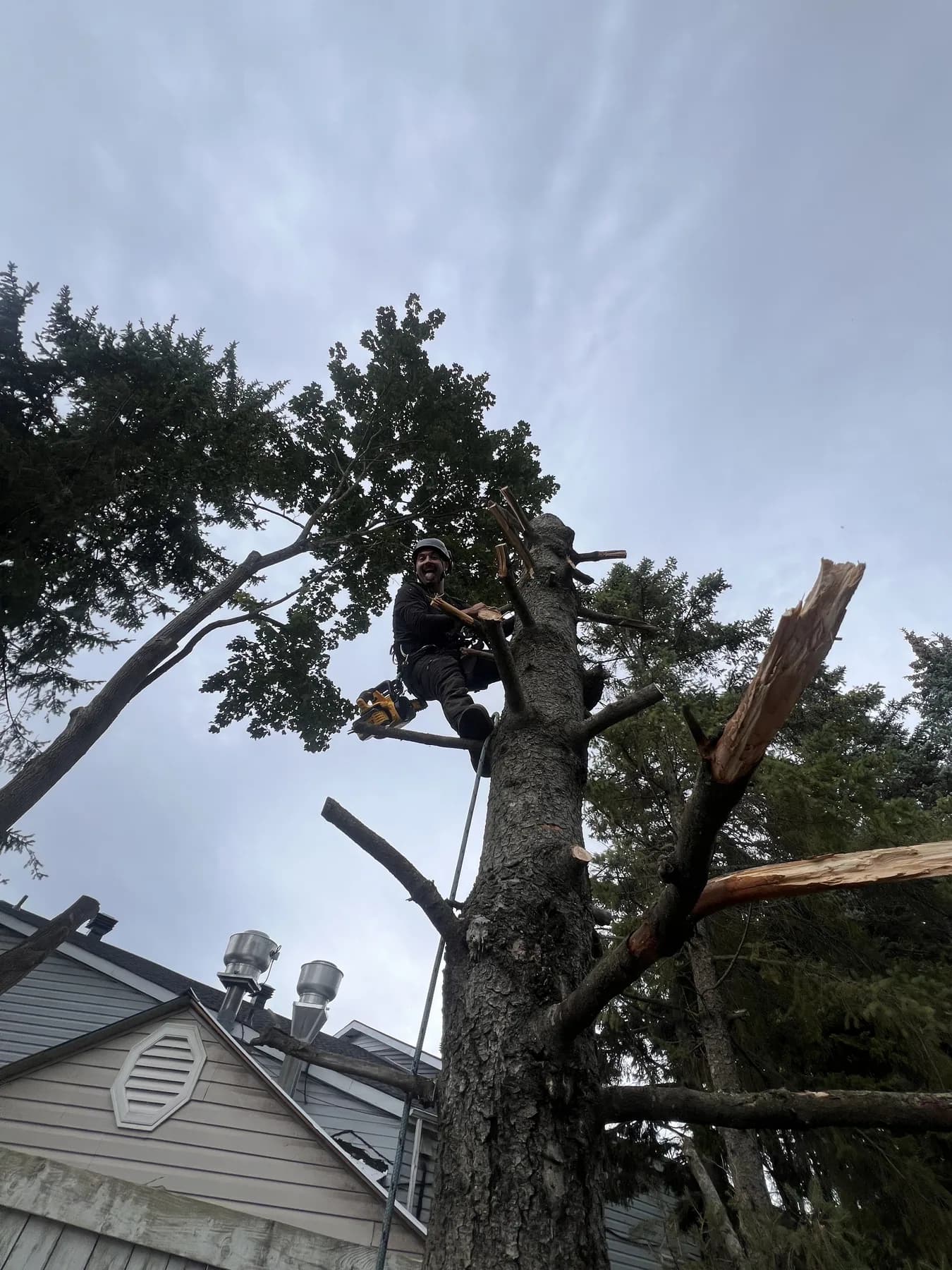
Does the tree need to come down?
Removal may be considered for a dead or failed tree, unacceptable risk, severe structural compromise, an approved construction conflict or a species and site combination that cannot reasonably meet the property objective. Concern alone is not a diagnosis, and a large tree is not automatically a removal tree.
Pruning, target management, monitoring, support or project changes may preserve a tree in some situations. The available choices depend on the tree, targets, ownership, site history and the benefit expected from each option.
How the removal is planned
Planning checks the tree and targets, overhead lines, underground work, access width, slopes, structures, fences, traffic, drop zone and material route. A tree with open felling space is a different job from a sectional dismantle over a house or tight backyard.
Equipment is selected for the actual site. The work zone and property protections should be established before cutting starts, and line-clearance restrictions must be respected.
Permits, ownership and utilities
Ottawa protects City-owned trees and certain private trees. Confirm whether the trunk is private, shared or on the road allowance, then check the current City process before work. A dead or imminently hazardous condition may be handled differently, but it should be documented and confirmed rather than used as a casual permit shortcut.
The quote should state who is responsible for permits, reports and fees. Utility coordination and underground locates are separate from municipal permission and may be needed depending on the work.
The scope after the last cut
Confirm whether logs are removed, cut to a requested size or left whole; whether brush is chipped and removed; and whether chips can stay. Stump grinding, root excavation, backfill, topsoil, seed and sod are not the same service and should be priced separately.
A final walkthrough should compare the property with the written scope and identify any deferred stump, restoration or planting work.
Primary sources
Rules and requirements can change. Check the current source before acting.
Reviewed: August 13, 2026