Tree Ownership
Is This Tree Yours, the City's, or a Boundary Tree? Ottawa and Gatineau Next Steps
Before booking tree work, sort out whether the tree may be municipal, shared across a property line, or private, then take the right next step.
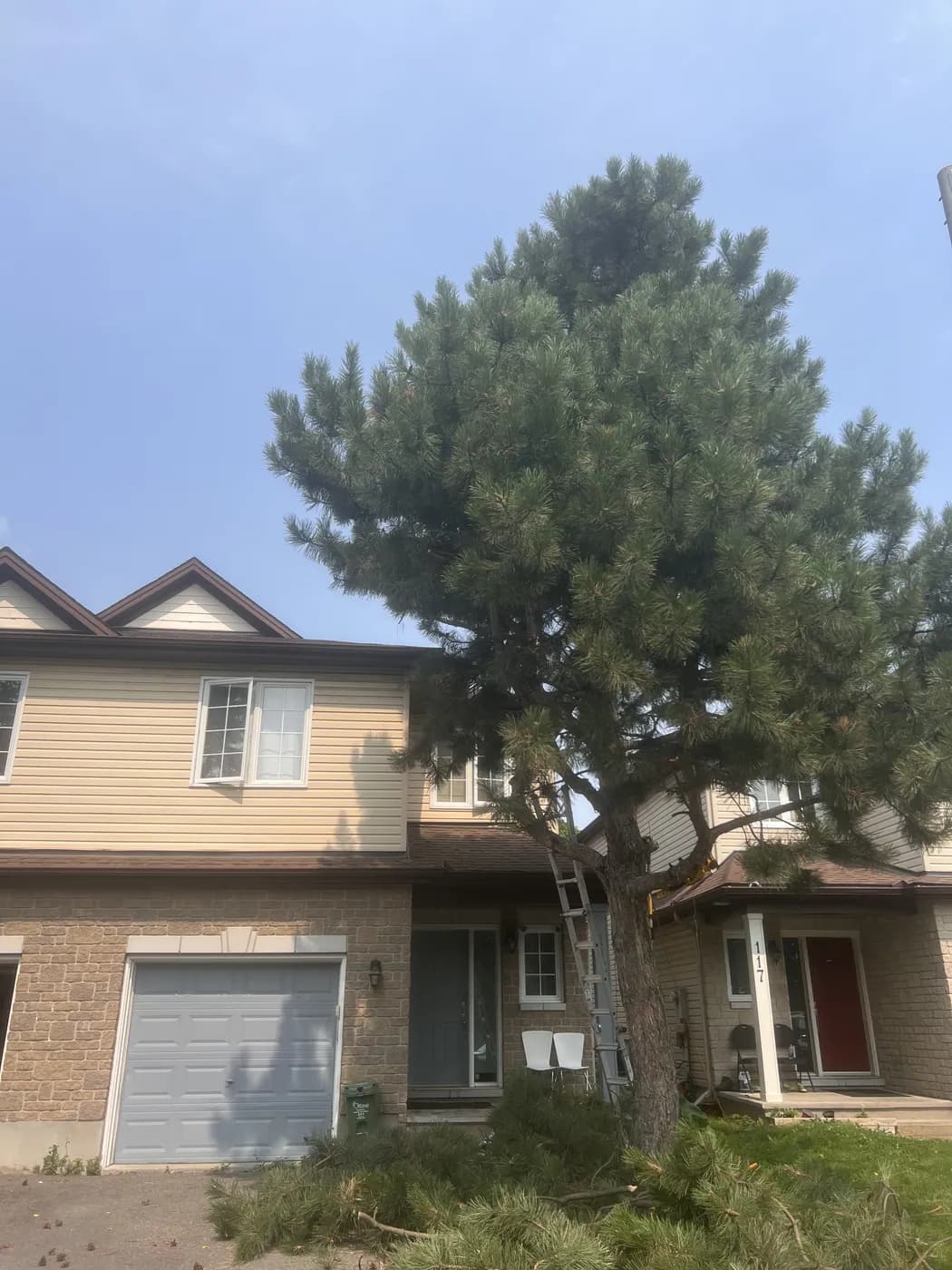
A tree beside a driveway, sidewalk, fence, or road can look like it belongs to the nearest house. That is not enough to authorize work. Before you request pruning, removal, stump work, or construction near it, pause and sort out the ownership question. The next call is different for a possible City tree, a trunk on a property line, and a tree that is clearly private.
In Ottawa, the City says its tree inventory is advisory and must not be used to verify ownership. In Gatineau, a tree on the City street right-of-way is not a private planting site, but location alone still does not settle every existing-tree question. Use the municipal route when you are unsure, and keep a private tree quote conditional until the right authority has clarified its part.
Start with a simple stop-work rule
Do not cut, dig around, attach equipment to, or arrange removal of a tree just because it appears to be on your side of a fence. A tree can be near a road allowance, cross a boundary, or have roots and protection issues that are not visible from a photograph. A contractor can discuss a possible private-work scope, but cannot determine municipal ownership or settle a property-line dispute.
If there is fire, injury, a downed line, or immediate danger to people, call 9-1-1 first. If wires or electrical equipment are involved, keep clear and contact the utility before discussing private work. For a non-emergency ownership question, keep people clear of any unstable area and use the appropriate municipal route before a saw, grinder, or excavator arrives.
Ottawa: treat the tree inventory as a clue, not proof
Ottawa's Tree Inventory lists City-owned trees in road rights-of-way and parks, but the City says the dataset should not be used for ownership verification. It can help you describe the location, but it cannot replace a municipal review. Do not turn a map pin, a boulevard location, or an old planting story into permission to work on the tree.
If you find an apparent error or omission in the inventory, the City directs residents to 3-1-1. That is the safer next step when ownership changes what you are planning to do. Share the address and a safe description of the tree's location. Do not enter a road allowance, climb the tree, or expose roots to collect better evidence.
A street-side tree may need Forestry Services, not a private crew
The City of Ottawa identifies street trees within the City right-of-way in front of houses as examples of City-owned trees that staff look to retain and protect in development situations. That makes a tree near the front of a lot a reason to check, not a rule that every front-yard tree belongs to the City.
For a planned request to remove a City tree, Ottawa directs people to contact Forestry Services through 3-1-1 so a Forestry Inspector can respond. Keep the request separate from a private removal quote. A private provider should not be asked to remove a possible City tree while that route is unresolved.
A trunk on the property line is a different problem
In Ontario, the Forestry Act says a tree whose trunk grows on the boundary between adjoining lands is common property of the adjoining owners. The same section makes injuring or destroying a boundary tree without the landowners' consent an offence. That is why a fence, a spreading canopy, or roots on both sides are not enough to decide the issue. The location of the trunk and the actual boundary matter.
Do not use this guide as legal advice or a substitute for a survey. If you believe the trunk is on a boundary, pause the work and speak with the affected owner before arranging a removal or major pruning. Ottawa's planning guidance also says both owners' permission is required before the City can issue a removal permit for a boundary tree.
Gatineau: keep private-property work separate from City street property
Gatineau says required trees must be planted inside the limits of the private property and cannot be planted on City property in the street right-of-way. That helps explain why a street-side location deserves a municipal check. It does not let a homeowner decide ownership from placement alone, especially for an established tree.
For a tree on your Gatineau property that you want to fell, the City says an authorization certificate must be issued before felling begins. The City routes the request through 3-1-1 or an online 3-1-1 request. If the tree may be on municipal property, do not treat the private-property certificate route as permission to work first. Ask the City which route applies to the actual location.
Bring the right details to the ownership check
Start with the civic address, the nearest intersection if the tree is near a public route, and safe wide photographs showing the tree in relation to the curb, sidewalk, driveway, fence, and structures. State what you are planning, such as removal, pruning, excavation, fence work, or stump grinding. Mention any change in condition without calling it a diagnosis.
Keep any City, utility, or neighbour response with the project file. If a municipality confirms that the remaining work is ordinary private-property work, then a tree-service quote can define access, the objective, material handling, and exclusions. If a utility line, public route, permit, or ownership issue remains open, that condition belongs in the scope before work is booked.
Frequently asked questions
Can I use Ottawa's tree inventory to prove that a tree belongs to the City?
No. The City says its tree inventory is advisory and should not be used for ownership verification. Use it only as context, then contact 3-1-1 if ownership affects planned work or a municipal request.
Who do I contact about a possible City tree in Ottawa?
For a planned request involving a City tree, Ottawa directs residents to contact Forestry Services through 3-1-1. Give the address and a safe description of the location, and do not authorize private work while the City route is unresolved.
What if the tree trunk sits on the property line?
Ontario's Forestry Act says a tree whose trunk grows on the boundary is common property of the adjoining owners. Do not assume a fence, canopy, or roots proves a boundary tree. Pause the work, confirm the situation, and obtain the required consent before removal or injury.
Does a Gatineau tree-cutting certificate apply to a City street tree?
Do not assume it does. Gatineau's certificate route is for a person who wants to fell a tree on their property. If the tree may be on City property or the street right-of-way, ask Gatineau 3-1-1 which route applies before arranging private work.
Can I get a quote before ownership is confirmed?
You can describe the possible private work, but the quote should remain conditional. A contractor cannot confirm municipal ownership, settle a boundary dispute, or override a utility or municipal direction. Confirm those prerequisites before booking the work.
Sources
Rules and safety guidance can change. Check the current authority page before acting.
Send Hungry Beaver the confirmed private-property details, safe photos, access notes, and any City or utility instructions. We will confirm whether a quote or site visit is the next step.
Request a private tree-work quote