Stump Planning
Stump Grinding vs. Removal in Ottawa: What to Choose
Grinding and full excavation leave different ground conditions. Choose the scope by the planned use, access, utilities, roots, chips, and finish.
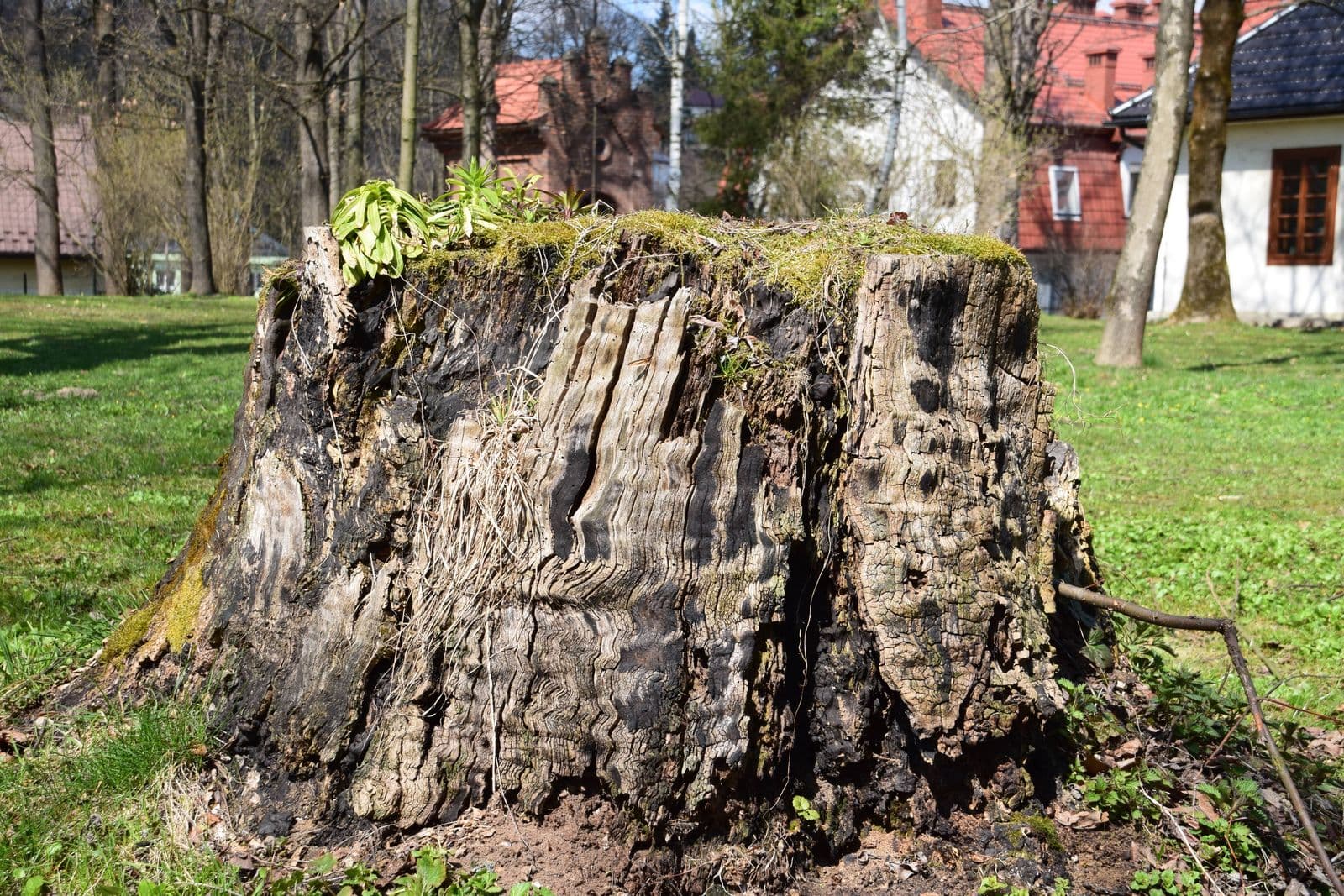
Choose stump work by what the ground needs to support next. Grinding reduces the stump below an agreed grade and leaves roots in the soil. Full excavation removes a larger root mass and disturbs a wider area. If the goal is lawn repair, a garden, a new tree, a fence, a driveway, or construction, say that before the quote. The future use decides whether ordinary grinding is enough.
The words 'stump removal' are often used loosely. Ask the provider to state whether the quote covers grinding, excavation, surface roots, chip removal, backfill, hauling, and final grading. A low price for the wrong finish is not the cheaper option once another contractor has to reopen the area.
Grinding and excavation are different jobs
A stump grinder uses a cutting wheel to reduce the stump and selected root flare into chips. The work stops at the depth and footprint agreed in the quote. Roots continue beyond that area and remain underground. Grinding usually concentrates disturbance around the stump, but it does not extract the entire root system.
Full excavation uses different equipment and removes a larger stump and root mass. It creates a wider hole, more soil disturbance, and more material to handle. The access route, underground services, nearby structures, retaining walls, and restoration plan may rule out excavation even when completely clearing the root ball sounds attractive.
- Grinding: defined depth and footprint, with roots remaining beyond the work area.
- Excavation: larger root mass removed, wider disturbance, and a larger restoration scope.
- Neither term defines chip hauling, backfill, topsoil, seed, sod, or a construction-ready finish unless the quote says so.
Let the next use set the required finish
For lawn repair, the scope may need enough depth for chip removal, suitable soil, grading, and the chosen surface. For a garden, remaining wood and roots may affect where plants can be placed. For a replacement tree, planting directly in the old stump location can create poor soil conditions and conflicts with remaining roots, so the new planting position and species need separate planning.
A fence post, patio, driveway, addition, or other structure needs more than a promise that the stump will be 'gone.' Give the tree provider the project drawings or required clear area. The contractor responsible for the new work should confirm what condition it needs before stump equipment is booked.
Depth and surface roots belong in writing
Depth should be measured relative to the surrounding grade, not described as 'deep enough.' A sloped yard, raised root flare, old mound, or planned grade change can make a number meaningless unless the reference point is clear. Ask where depth will be measured and whether the quoted area includes visible surface roots.
Chasing every root is not ordinary stump grinding. Roots can extend far beyond the trunk, pass under hardscape, cross property boundaries, and run near other trees or utilities. If a specific root conflicts with planned work, identify that root and the required area rather than assuming the grinder will follow the whole system.
Confirm ownership before work near the street
A stump close to a sidewalk, boulevard, road allowance, or property line should not be treated as private based on appearance. The City of Ottawa says Forestry Services handles stump removal on City-owned property as part of its tree-removal process. Use 3-1-1 when ownership is uncertain or the stump may belong to the City.
Do not grind a neighbour's stump or roots crossing a boundary without clear authority. A tree-service provider cannot settle a survey or legal ownership dispute. When the location is uncertain, pause the quote and confirm the boundary or municipal role first.
Request locates before disturbing the ground
Before stump work that breaks ground, request a public locate through Ontario Dig Authority, formerly Ontario One Call. Ottawa's Call Before You Dig page still uses the old name. For a single-address project, the Authority says to request a locate at least 5 business days before digging and wait for every notified infrastructure owner to respond before starting.
Public locates cover infrastructure owned by the companies contacted through that process. They do not show every service on private property. Ontario Dig Authority lists gas lines to barbecues or pool heaters, wiring to sheds or garages, sewer and septic systems, and lines feeding security equipment as examples that need a private locate. If one could cross the stump area, arrange that separate locate before grinding.
Share the locate responses with the tree contractor and leave all markings in place. If a mark or private line crosses the planned grind area, pause and resolve the conflict before equipment arrives. The scope may need a different footprint or depth, or separate service work.
If a buried line is damaged, stop immediately. Call 9-1-1 if there is immediate danger to people or property, notify the infrastructure owner, and leave the excavation open for inspection.
Measure access before choosing equipment
Measure the narrowest gate, side yard, turn, and overhead clearance on the full route. Include steps, slopes, retaining walls, soft ground, septic areas, decks, air conditioners, and surfaces that cannot carry heavy equipment. The opening closest to the stump is not always the limiting point.
Also clear the work zone of stones, metal edging, wire, concrete, and loose objects when it is safe to do so. Hidden nails, fence hardware, embedded fill, or rock can stop work and damage equipment. The quote should explain how concealed material or inaccessible roots are handled.
Decide who keeps the chips and restores the area
Grinding creates a mix of wood chips and soil that can occupy more volume than the original stump. Decide whether the material stays, is piled, is hauled, or is partially removed. If the area will become lawn or garden, ask who supplies soil, compacts and grades the area, and completes the final surface.
Do not assume that stump grinding includes root excavation, hauling every chip, topsoil, seed, sod, planting, fence work, or hardscape repair. A complete written quote separates the grinding scope from restoration and states what condition the site will be left in.
Frequently asked questions
Is stump grinding the same as removing the whole stump?
No. Grinding reduces the stump within an agreed depth and footprint while roots remain beyond the ground area. Full excavation removes a larger root mass and creates a wider restoration project.
How deep should a stump be ground?
The right depth depends on the next use and surrounding grade. Lawn repair, planting, fencing, and construction have different requirements. Put the reference grade, depth, footprint, and surface-root scope in writing.
Do I need utility locates before stump grinding in Ottawa?
If the stump work will break ground, request a public locate through Ontario Dig Authority, formerly Ontario One Call. Allow at least 5 business days for a single-address request, then wait until every notified infrastructure owner has responded. Public locates do not cover every private service, so check property records and arrange a private locate where needed.
Can I plant a new tree where the old stump was ground?
Do not assume the same spot is suitable. Remaining roots, wood chips, soil condition, space, and the needs of the replacement tree all matter. Plan the new planting location separately from the grinding quote.
Who removes a stump on City property in Ottawa?
The City says Forestry Services removes stumps on City-owned property as part of its tree-removal process. Use 3-1-1 when a stump near a sidewalk, boulevard, road, or property boundary may be municipal.
Sources
Rules and safety guidance can change. Check the current authority page before acting.
Send Hungry Beaver the stump size, safe photos, narrowest access measurement, known utilities, desired depth, and planned use. We will confirm whether a quote or site visit is the next step.
Request a stump-grinding estimate